
MACH | CNC TUBE PLASMA CUTTING MACHINES

CUT TUBE. PIPE. PROFILES. FASTER

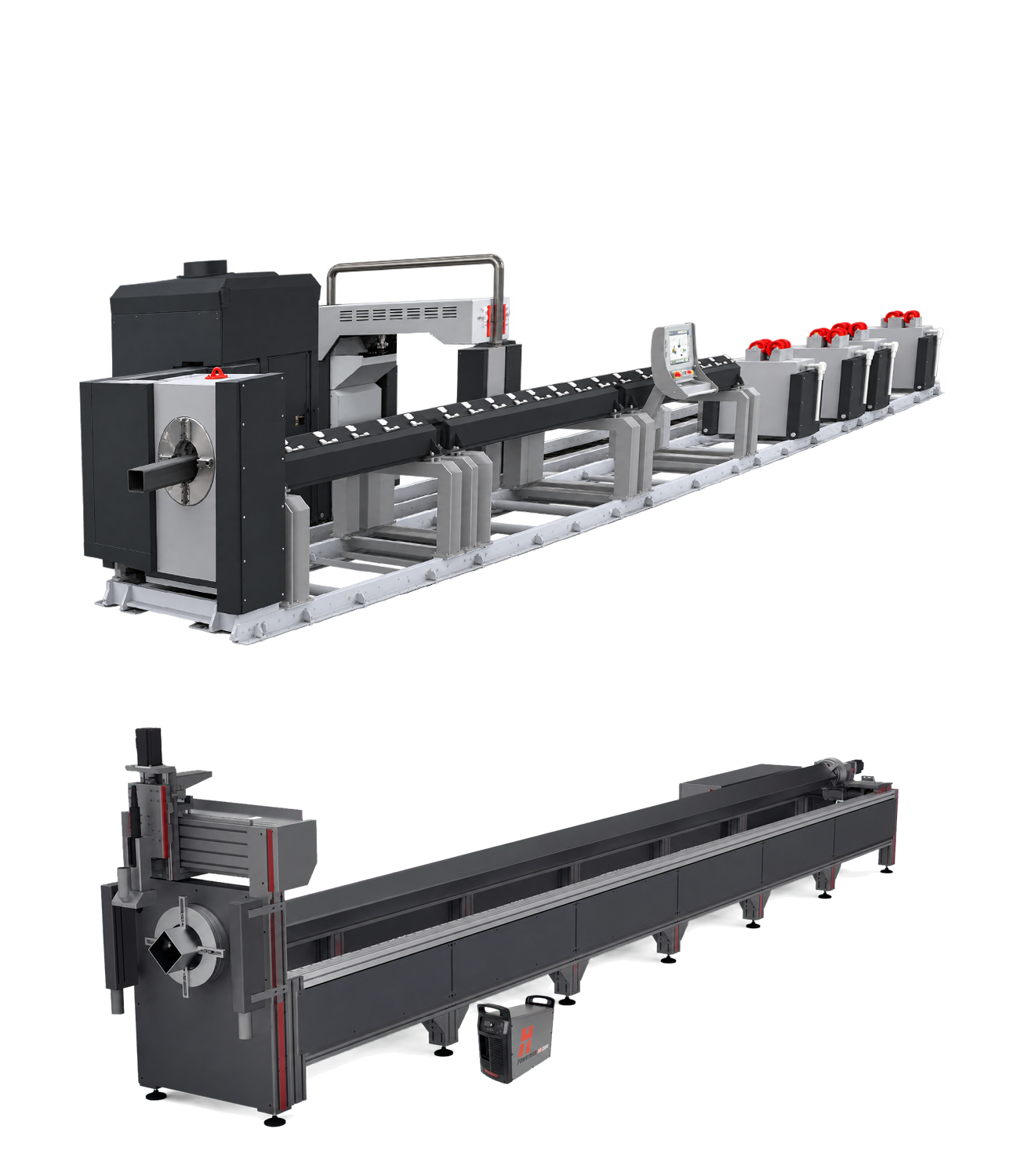
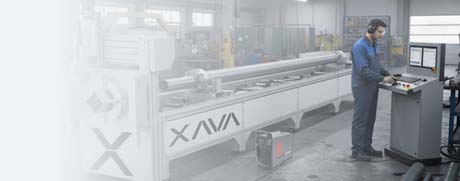
MACH CNC Tube Plasma cutting machines deliver fast, accurate and highly efficient processing of round tube, pipe, RHS, SHS and structural steel profiles.

From compact fabrication systems through to large industrial pipe profiling machines, our range is designed around one objective — helping manufacturers produce complex welded components with greater speed, consistency and precision.

Whether you’re cutting saddles, mitres, slots, holes, notches, intersections or weld bevels, MACH provides complete CNC tube plasma solutions tailored to your production requirements.

Technology & Features

PRECISION IN EVERY CUT

Advanced CNC tube plasma technology. Engineered for accurate profiling, faster processing and consistent cut quality across tube, pipe and structural sections. Purpose-built features for complex cuts, weld preparation and dependable day-to-day production.
01

CNC TUBE PLASMA

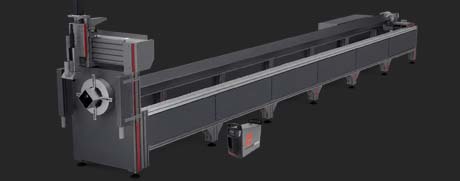
Automated plasma cutting for accurate processing of tube, pipe and structural sections. Produce complex profiles quickly with consistent CNC-controlled results.

02

LARGE FORMAT PROCESSING

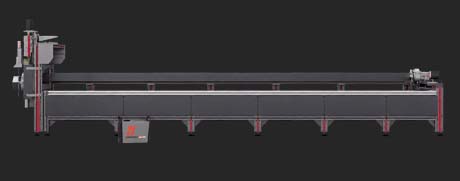
Process long tube, heavy sections and large-diameter pipe with accurate CNC positioning. Machine configurations are available for demanding structural and industrial applications.

03

BEVEL CUTTING

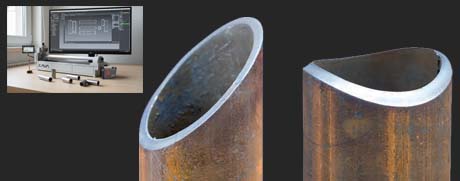
Multi-axis CNC bevel cutting produces angled edges and weld preparations directly on tube and pipe. Reduce secondary grinding and improve fit-up before welding.

04

INTELLIGENT AUTOMATION

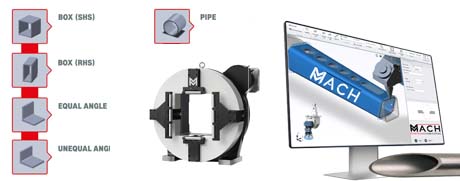
Process round pipe, SHS, RHS, angle and structural profiles on a single CNC system. Ideal for fabricators working across varied material sizes and sections.

05

REDUCED FINISHING

Combine CNC tube plasma cutting with automated material handling and intelligent machine control. Reduce manual handling while improving workflow and production efficiency.

06

CAD/CAM PROGRAMMING

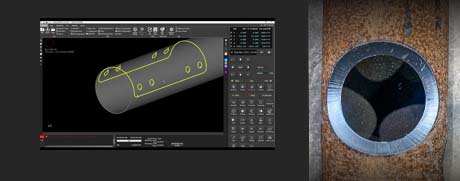
Dedicated tube and pipe CAD/CAM software simplifies programming of holes, slots, notches, saddles and intersections. Convert digital part geometry into accurate CNC cutting paths.

‎ ‎ ‎ ‎‎ ‎ ‎ ‎SMARTER CUTTING. ‎ ‎ ‎ ‎ ‎ STRONGER PERFORMANCE.

M MACH | Metalwork Machinery

CNC TUBE PLASMA QUESTIONS? WE’VE GOT ANSWERS

CNC Tube Plasma Frequently Asked Questions

Get clear answers to the most common questions about CNC tube and pipe plasma cutting machines, including cutting capabilities, tube and pipe sizes, profiles, bevel cutting, plasma technology, CAD/CAM software, automation and choosing the right system for your application. Can’t find what you’re looking for? Contact the MACH team | We’re here to help.

A CNC tube plasma cutting machine is an automated system for cutting and profiling metal tube, pipe and structural sections using a plasma arc.

Rather than manually measuring, marking and cutting each connection, the machine uses CNC control to accurately position the material and produce programmed cuts such as saddles, mitres, holes, slots, notches, intersections and end profiles.

Depending on the machine configuration, CNC tube plasma systems can also provide bevel cutting, weld preparation and part marking, allowing several fabrication processes to be completed in a single automated operation.

Both technologies automate tube and profile processing, but they suit different applications.

Tube laser cutting offers very high precision, a narrow kerf and excellent detail, making it particularly attractive for thin-to-medium wall tube and high-accuracy production.

Tube plasma cutting is an extremely productive solution for many fabrication, structural and pipe-processing applications, particularly where heavier sections, weld preparations and larger diameter pipe need to be processed.

The best technology depends on the material, wall thickness, profile size, required accuracy, finished component and production volume rather than simply choosing plasma or laser based on cutting speed alone.

CNC tube plasma technology is available for everything from small fabrication tube through to very large industrial pipe.

MACH offers small, medium and large CNC tube plasma cutting systems, allowing the machine to be selected around the actual range of material your business processes rather than forcing every application onto one machine platform.

Depending on configuration, industrial pipe profiling systems can process diameters ranging from relatively small tube to well over 1,000 mm, with specialist heavy-duty systems extending considerably beyond this. Working lengths can also be configured for long pipe and structural fabrication applications.

This is an important SEO answer for us. It establishes MACH as covering the complete market rather than looking like we sell one generic tube cutter.

Depending on the machine and handling system, CNC tube plasma machines can process round pipe, square tube, rectangular hollow section and other structural profiles.

Suitable systems can produce mitres, notches, slots, holes, saddles, intersections and complex connection profiles directly from programmed geometry.

For customers processing structural sections as well as conventional pipe, the material range should be reviewed carefully when specifying the machine, as capabilities vary significantly between different tube plasma systems.

Yes. This is one of the biggest advantages of CNC pipe and tube plasma cutting.

The machine can automatically produce holes, slots, saddles, mitres, copes, notches, branch connections and pipe-to-pipe intersections from programmed part geometry.

Complex profiles that previously required manual marking, sawing, drilling, grinding and fitting can therefore be produced in a controlled CNC process, reducing fabrication time and improving consistency between components.

Yes. Automatic bevel cutting is available on suitable multi-axis CNC tube plasma machines.

The cutting head can be angled relative to the material to produce weld preparations and profiled connections directly during the cutting process. This can significantly reduce the manual grinding and preparation normally required before fit-up and welding.

Advanced plasma technology can also use pre-developed process parameters to improve bevel consistency and reduce trial-and-error setup for supported materials and applications.

This is another one I definitely want because “pipe cutting and beveling machine” is a separate commercial search intent that we can capture naturally.

Yes, although hole quality depends on the plasma system, machine motion, material and software.

Advanced high-definition plasma systems can use dedicated hole-cutting processes designed to improve roundness and reduce taper in mild-steel holes.

For example, Hypertherm’s True Hole® technology automatically controls parameters including gas, amperage, speed, lead-in/lead-out and arc termination for supported hole geometries. This can reduce the requirement for secondary drilling on suitable applications.

Notice I’ve deliberately said “can reduce”, not “eliminates drilling”. That’s much more technically defensible.

CNC tube plasma systems are used across structural steel, general fabrication, agricultural equipment, construction, pipework, process engineering, material handling, energy, power generation, tanks and vessels, infrastructure and heavy engineering.

Smaller systems can be ideal for general fabrication and production work, while larger multi-axis machines are designed for demanding pipe and structural applications where complex intersections and weld-ready profiles need to be produced efficiently.

This broad range of applications is one reason MACH offers different machine sizes and configurations rather than a single tube plasma solution.

Yes. Modern tube and pipe cutting software can take 3D CAD models or common drawing data and convert the required geometry into CNC cutting paths.

Dedicated tube software can also provide automatic nesting, process parameters, cut sequencing and bevel programming, depending on the machine and software package.

Some systems also provide parametric libraries for common pipe connections, allowing frequently used profiles to be programmed without creating every component from scratch in external CAD software.

The biggest advantages are speed, repeatability, reduced marking-out, reduced manual finishing and more consistent fit-up.

Instead of manually measuring a pipe, creating templates, cutting the profile and then grinding it until the connection fits, the required geometry can be programmed and reproduced automatically.

For fabrication businesses producing repeated pipe connections or complex assemblies, this can shorten preparation times, improve component consistency and allow skilled welders and fabricators to spend more time on higher-value work.

Plasma also requires no pre-heating and provides greater control and speed than several traditional thermal or manual pipe-cutting methods.

Start with the material you actually process.

The key considerations are:

minimum and maximum tube/pipe diameter, profile type, wall thickness, material grade, stock length, component weight, required holes and profiles, bevel requirements, plasma power, loading method, software and expected production volume.

A company cutting relatively small fabrication tube has very different requirements from a structural steel fabricator processing heavy sections, while a pipework manufacturer handling large-diameter pipe may require a completely different machine architecture.

MACH offers small, medium and large CNC tube plasma cutting systems, allowing us to assess your parts, drawings and production requirements before recommending the most suitable machine and plasma configuration.

The cutting capacity of a CNC tube plasma cutting machine depends primarily on the plasma power source, material type, required cut quality and the machine configuration.

Plasma systems are available in different power levels, allowing machines to process everything from relatively thin-wall fabrication tube through to heavy-wall pipe and structural sections.

When selecting a machine, maximum severance thickness alone should not be used as the specification. The more important figure is the thickness that can be cut consistently at the required quality and production speed, particularly when holes, intersections or weld bevels are required.

MACH can configure tube plasma systems around the customer’s actual material range, wall thickness, pipe diameter and production requirements, rather than simply specifying the highest available plasma power

The price of a CNC tube plasma cutting machine varies considerably depending on its size, cutting capacity and level of automation.

Important cost factors include maximum tube or pipe diameter, working length, plasma power, number of CNC axes, bevel cutting capability, CAD/CAM software, extraction, material handling and automatic loading or unloading.

A compact machine designed for general fabrication will therefore have a very different investment level from a large industrial pipe profiling system designed for heavy-wall pipe, complex intersections and automated weld preparation.

For an accurate quotation, MACH can assess your typical drawings, material sizes, wall thicknesses and production volumes and recommend an appropriate small, medium or large tube plasma system.

The plasma system is one of the most important components of a CNC tube and pipe cutting machine, as it influences cutting speed, thickness capacity, edge quality, hole quality and overall productivity.

Depending on the application, machines can be equipped with advanced high-definition plasma cutting technology, with the power source selected around the material type and wall thickness being processed.

Technologies such as Hypertherm XPR® plasma systems can provide advanced process control for applications including precision cutting, improved hole quality and bevel cutting when combined with the appropriate CNC machine, software and process parameters.

The correct plasma source should therefore be selected as part of the complete machine specification rather than simply choosing the highest amperage available. MACH can match the machine, plasma power, cutting head and software to the customer’s actual tube and pipe applications.

These are much better. 14 at roughly this level of detail is where I’d stop. It gives Google and AI search systems substantial, technically useful answers while still making the accordion useful to an actual buyer.