MACH | SURFACE FINISHING & DEBURRING
PRECISION . FINISH . PRODUCTIVITY
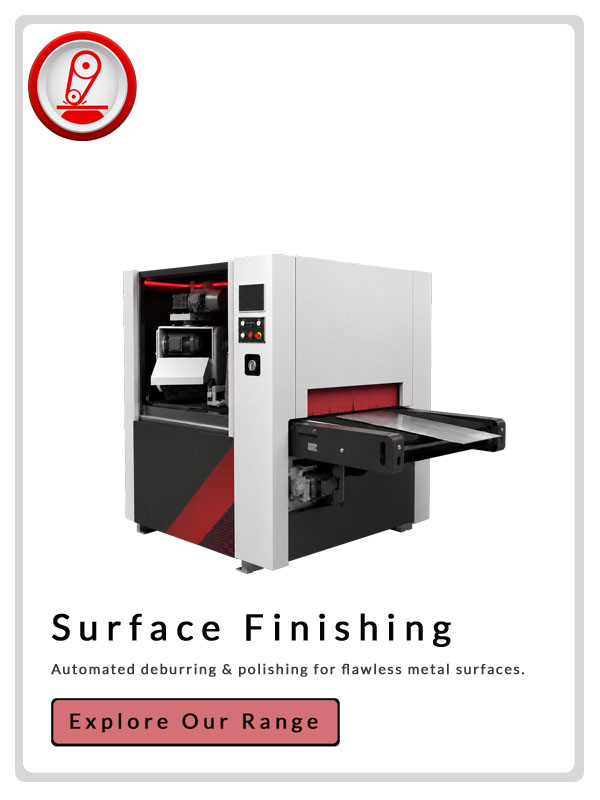
MACH surface finishing and deburring machines deliver consistent edge quality, smooth surfaces and repeatable finishing across a wide range of metal components. From automated deburring and edge rounding to precision grinding, brushing and polishing, our systems are engineered for efficient processing, reduced manual finishing and reliable production across the UK & Ireland.
PRECISION DEBURRING
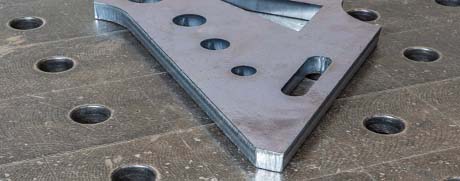
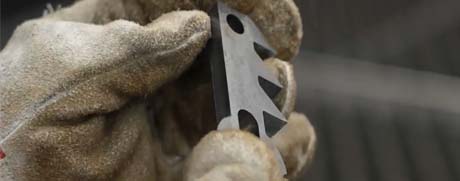
Remove sharp edges, burrs and cutting imperfections from laser-cut, plasma-cut and punched metal components.
CONSISTENT EDGE ROUNDING
Produce smooth, controlled edge radii to improve component handling, coating preparation and finished-part quality.
SUPERIOR SURFACE FINISH

MULTI-PROCESS FINISHING
AUTOMATED PROCESSING
Programmable settings, controlled abrasive systems and powered conveyors improve repeatability and reduce manual processing.
LOWER FINISHING COSTS

WORKING WIDTH
Compact / Medium / Wide-Belt Systems
MATERIAL RANGE
Mild Steel / Stainless Steel / Aluminium / Selected Alloys
FINISHING OPERATIONS
Deburring / Edge Rounding / Grinding / Brushing / Polishing
PROCESSING TECHNOLOGY
Abrasive Belts / Rotary Brushes / Multi-Head Systems
CONTROL & EXTRACTION
Programmable Settings / Conveyor Feed / Wet or Dry Processing
Technology & Features
ENGINEERED FOR EVERY FINISH
Advanced metal surface finishing technology. Built around edge quality, surface consistency and production efficiency. Precision abrasive systems, intelligent machine controls and flexible processing configurations work together to deliver reliable finishing results across a wide range of fabricated metal components.
01
PRECISION DEBURRING
High-performance abrasive belt and brush systems remove burrs and surface imperfections from laser-cut, plasma-cut, punched and machined components. Controlled material removal supports consistent part quality while reducing manual finishing requirements.

02
ADVANCED EDGE ROUNDING
Rotary brush and specialised abrasive systems produce controlled edge radii on external contours and accessible internal features. Suitable configurations support edge preparation for powder coating, painting and other downstream manufacturing processes.

03
SLAG & OXIDE REMOVAL
Dedicated finishing systems remove suitable cutting slag and oxide layers from thermally processed components. Available configurations include heavy slag removal for plasma-cut parts and oxide removal from oxygen laser-cut edges, improving preparation for subsequent fabrication and coating operations.

04
SURFACE GRINDING & POLISHING
Precision abrasive belts, brushes and finishing media produce consistent linear grain, brushed and satin surface finishes. Specialised polishing systems can be configured for applications requiring finer cosmetic finishes on stainless steel and other metals.

05
AUTOMATED MULTI-HEAD PROCESSING
Advanced finishing machines combine multiple processing stations for deburring, edge rounding and surface conditioning. Adjustable conveyor speeds, programmable settings and controlled abrasive positioning support efficient processing and repeatable results.

06
WET & DRY FINISHING SYSTEMS
Dry abrasive finishing and wet processing systems provide different solutions for material removal, surface quality and dust management. Suitable extraction, filtration and process controls are selected according to the material, finishing operation and installation requirements.

SURFACE FINISHING QUESTIONS? WE’VE GOT ANSWERS
SURFACE FINISHING & DEBURRING FAQ & KNOWLEDGE CENTRE
Choosing the right metal finishing machine depends on your material type, component dimensions, required edge radius, surface finish and production volume. MACH supplies, installs and supports industrial deburring, edge rounding, grinding and polishing machinery across the UK & Ireland, from compact workshop systems to automated multi-head finishing equipment for demanding production environments.
Download Our Brochure
Explore deburring and finishing machine specifications, working widths, abrasive systems, available operations and technical options.
An industrial deburring machine removes unwanted burrs, sharp edges and cutting imperfections from manufactured metal components.
Machines commonly use abrasive belts, brushes or specialised finishing tools to process laser-cut, plasma-cut, punched and machined parts.
Automated systems reduce manual finishing and help improve consistency between
components.
Deburring removes unwanted sharp material or burrs left behind during cutting, punching or machining.
Edge rounding deliberately creates a smooth radius along a component’s edges.
Some machines perform both operations in a single pass, depending on their tooling
and processing configuration.
parts.
Suitable systems remove cutting burrs, round sharp edges and prepare components for
subsequent operations such as welding, assembly or coating.
The finishing process depends on the material, thickness and required edge quality.
Yes. Heavy-duty finishing machines can be equipped with specialised slag removal
systems to remove material attached to plasma-cut or flame-cut components.
Heavy slag removal generally requires different processing equipment from standard
light deburring.
The correct machine should be selected according to slag thickness, component size
and production requirements.
Oxygen-assisted laser cutting of mild steel can produce an oxide layer along the cut
edges.
Suitable finishing machines can remove this oxide layer before subsequent fabrication or coating operations.
Oxide removal is particularly relevant when preparing components for painting or
powder coating, where edge cleanliness and surface preparation influence coating
performance.
Sharp edges can be difficult to coat uniformly and may have reduced coating thickness
compared with flatter surfaces.
Controlled edge rounding improves the edge geometry and can help support more consistent coating coverage.
The required radius and surface preparation depend on the coating specification,
component application and relevant quality standards.
Yes. Suitable machines can process stainless steel, aluminium, mild steel and other compatible metals.
The abrasive media, working parameters, workpiece retention and dust collection arrangements must be appropriate for the selected material.
Separate abrasives or processing arrangements may be needed to avoid cross contamination between materials.
Yes. Machines equipped with suitable abrasive belts and brushing systems can produce
consistent directional grain, brushed and satin finishes.
These are commonly used for stainless steel panels, architectural components,
enclosures and decorative metalwork.
The final appearance depends on abrasive selection, feed speed, processing sequence and material condition.
Certain specialist polishing machines can produce highly reflective or mirror-like surfaces using progressive abrasive and polishing stages.
Standard deburring and wide-belt finishing machines are not necessarily designed to achieve mirror polishing.
The required finish should be established before selecting the machine and polishing process.
Dry finishing uses abrasive belts or brushes without a liquid processing medium and requires appropriate dust extraction and collection.
Wet finishing uses a controlled liquid process to assist with cooling, lubrication and particulate management.
The correct approach depends on the material, finishing requirements, dust characteristics and machine design.
Yes. Suitable machines can process small components using appropriate conveyor systems, vacuum retention, magnetic support or specialised holding arrangements.
Minimum part dimensions depend on the machine configuration, workpiece geometry and material.
Very small or lightweight parts may require dedicated processing equipment. and reduced optical maintenance.
A multi-head finishing machine combines different processing units within one system.
For example, an abrasive belt may remove burrs, followed by rotary brushes that round edges or condition the surface.
Suitable configurations allow several finishing operations to be completed during one controlled processing sequence.
Consider whether you require deburring, edge rounding, slag removal, oxide removal, brushing or polishing.
MACH can review your components, production volumes and finishing requirements to
help identify a suitable machine configuration.
require appropriate control.
Depending on the material and process, equipment may require dedicated extraction, filtration, wet collection or additional fire and explosion protection.
The correct system must be established through a suitable risk assessment, particularly when processing combustible metal dust.
Our team helps customers understand machine operation, abrasive selection, setup
procedures and routine maintenance requirements.
support for the machinery we supply throughout the UK & Ireland.
Our focus is on maintaining reliable production, reducing unnecessary downtime and
supporting consistent finishing performance.